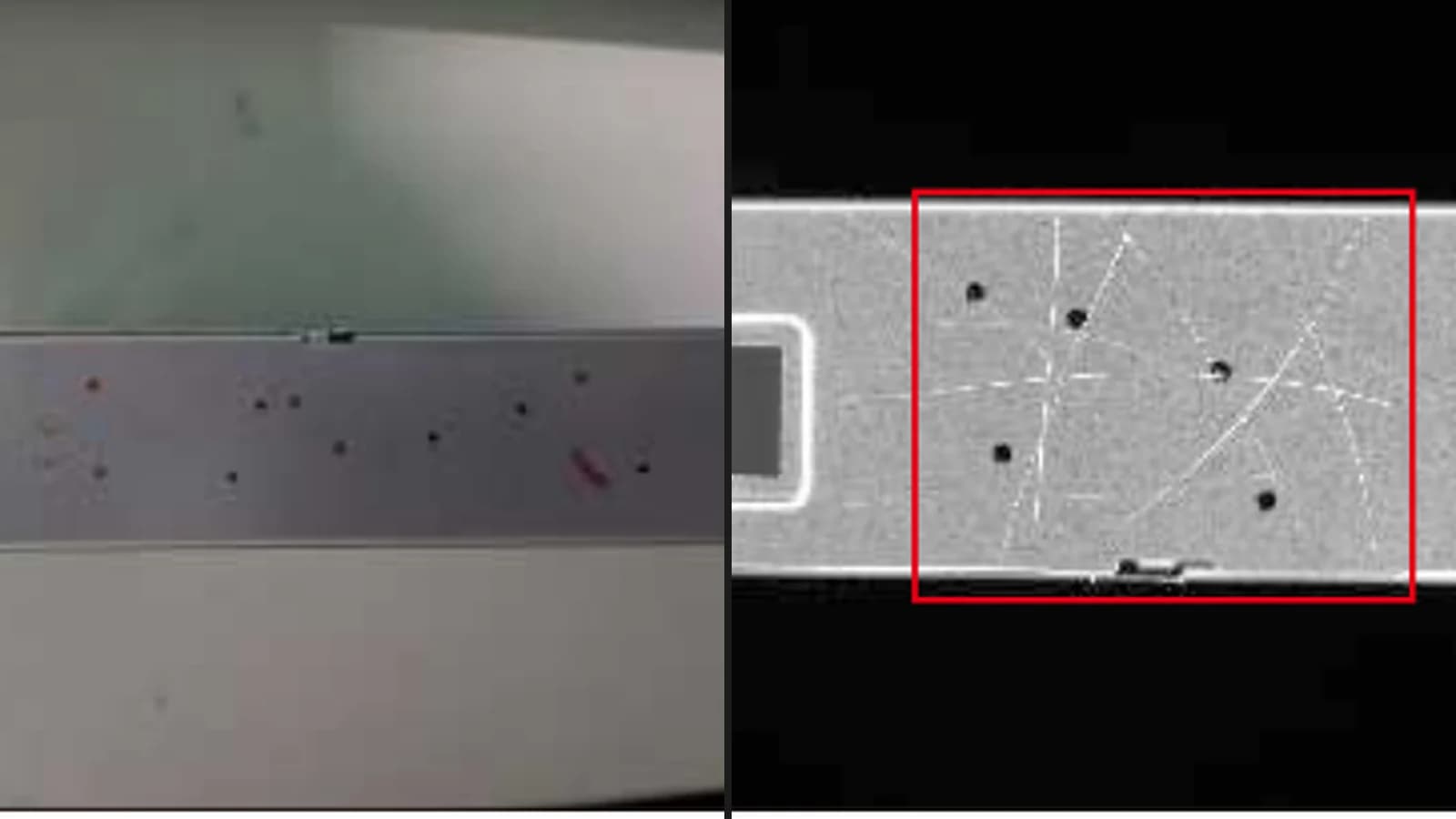
Which geometry matches the metal surface?
Coaxial light fits a flat face that looks back at the lens. Dome light fits a curved, cylindrical, or uneven glossy surface. Low-angle light fits a shallow scratch, dent, or tool mark that should scatter light into the lens while the surrounding face stays dark.
| Question | Coaxial | Dome | Low-angle |
|---|
| How it works | A beam splitter sends light out along the lens axis. | A hemisphere scatters light onto the part from many directions. | Light arrives at a shallow angle and the flat face reflects it away from the lens. |
| Image of a scratch | Dark mark on a bright face, when the face is flat. | Glare drops. A shallow scratch can also drop out. | Bright mark on a dark face, when the scratch catches the beam. |
| Do not use it when | The surface slopes or curves away from the lens. | The task is a shallow directional scratch on a flat face. | The scratch runs parallel to the beam, or the part is too curved for one angle. |
| LuxMV model to open | LXV-3COH coaxial | LXV-3DM dome | LXV-FPR low-angle |
How does coaxial lighting work, and when does it fail?
LXV-3COH is the high-power coaxial series for scratches on metal or plastic and for short-exposure moving targets. On a flat face, light on the lens axis returns to the camera. A scratch or pit that tilts the surface sends that light away, so the defect is dark. When the face itself slopes or curves, the whole region goes dark. Open the LXV-3COH model page for the coaxial comparison images.
How does dome lighting work, and when does it hide a scratch?
LXV-3DM uses a hemispherical diffuse structure. The catalog describes it for reflective and uneven surfaces. Light reaches the part from many directions, so a curve is less likely to throw one hotspot into the lens. The same diffusion reduces the directional shadow that makes a shallow scratch visible. Compare the dome with coaxial and low-angle light when the defect is a fine scratch rather than glare on a contour.
How does low-angle lighting show a scratch, and when does the scratch vanish?
LXV-FPR is a 24 V low-angle series. The catalog lists eleven sizes from 50 to 230 mm and says the low angle strengthens surface contrast while reducing reflected flare. The flat face sends the beam past the lens, so the background is dark. A scratch edge can send a little light back into the lens. Rotate the part or the light. A scratch aligned with the beam can disappear even though the same light showed it a moment earlier. The photograph on this page is the catalog bar-lit metal pair, not an LXV-FPR measurement record.
What should the sample comparison include?
Send the material, finish, scratch direction, field of view, working distance, camera, lens, and whether the part is still or moving. LuxMV can compare the candidate geometry on that sample. The comparison does not certify a production yield, a delivery date, or a result after the oil film, plating, or part pose changes. Two ways to start are on the sample-testing page: you send the part, or you ask whether an evaluation light can be sent for your project.