What inspection variables should be evaluated?
Capture red, green and blue channels separately with fixed camera settings. Distinguish colour discrimination from surface-direction information.
What lighting geometry fits this inspection task?
Light colour changes the relative brightness of materials and printed areas. Compare wavelengths using the sample response, rather than predicting the result from its visible colour alone. Separate sequential colour captures from simultaneous colour mixing.
Capture each colour with controlled exposure and check for saturated or overlapping camera channels. For colour inspection, fix white balance and record illumination conditions. For outlines, prioritise separation from the background. Repeat with material from different batches.
Related product family?
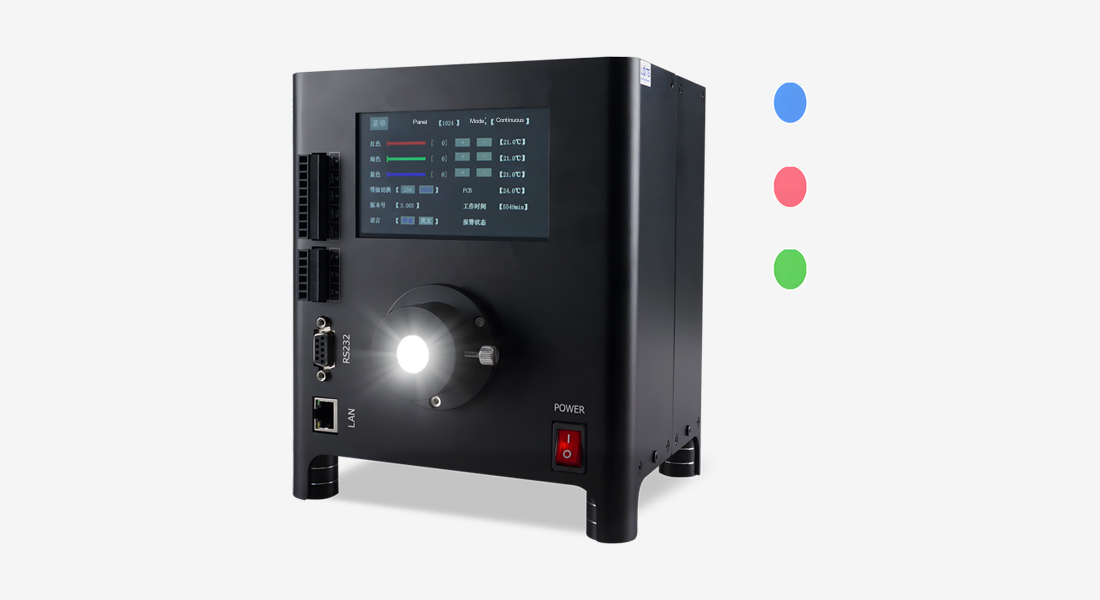
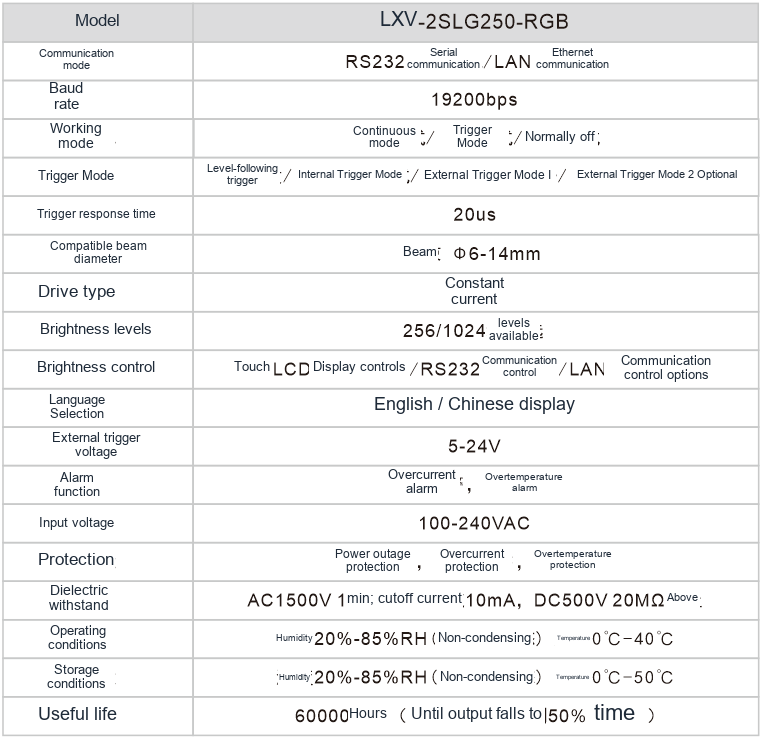
LXV-2SLG
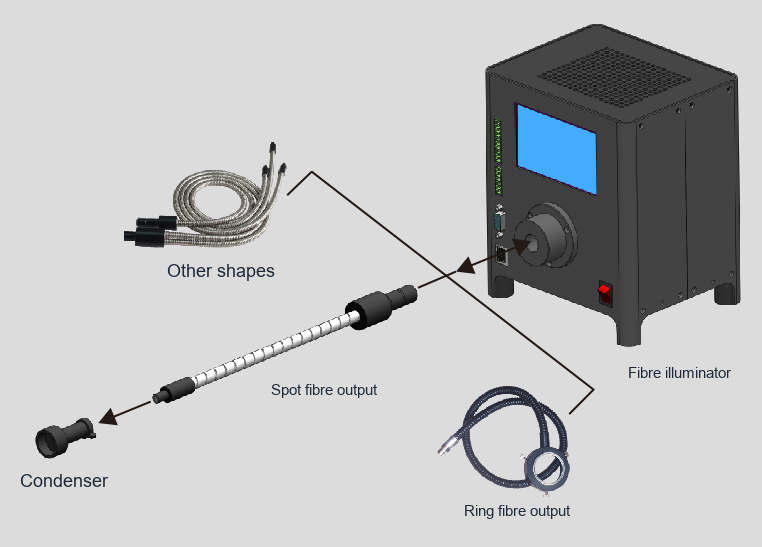
Bring light into compact spaces with a fiber guide.
Communication: RS232/LAN
Light output ports: 1
Compatible bundle diameter: Bundle diameter Φ6-14mm
Beam angle: Full angle 30°
Before choosing a configuration?
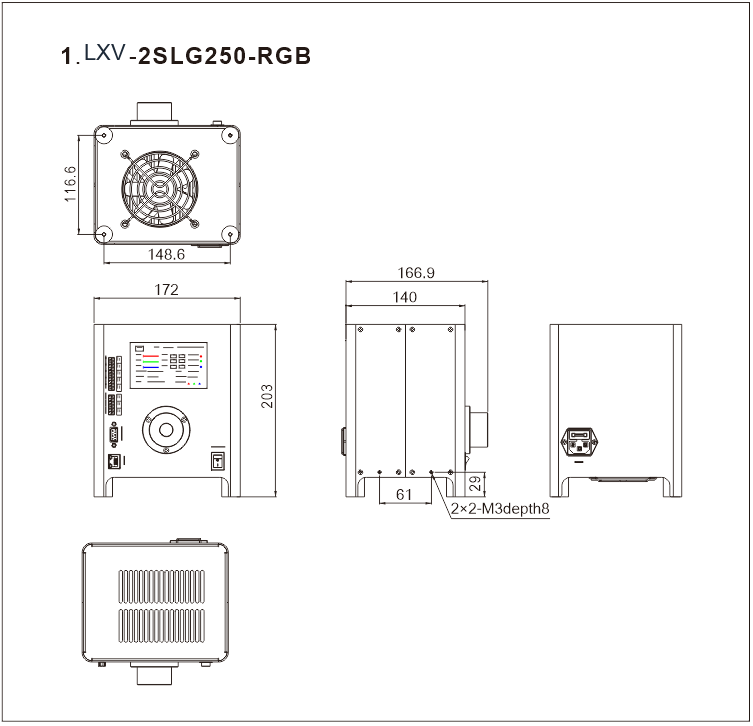
For selection, specify the field of view, smallest target feature, height variation, cycle time and installation space. Use the specific product page and drawing to verify electrical ratings, dimensions and compatibility.
Using RGB channels independently?
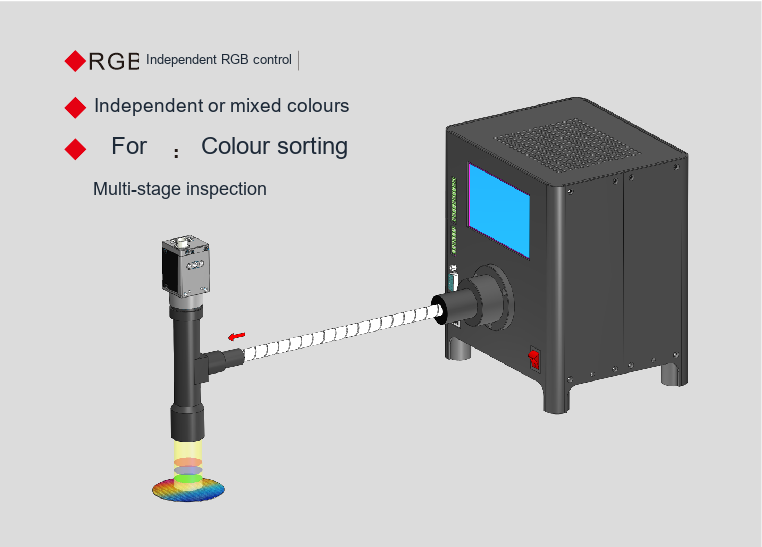
Capture red, green and blue illumination separately before evaluating mixed light. Independent frames show whether a colour channel suppresses the background or improves a particular material boundary. Mixed illumination can hide this information.
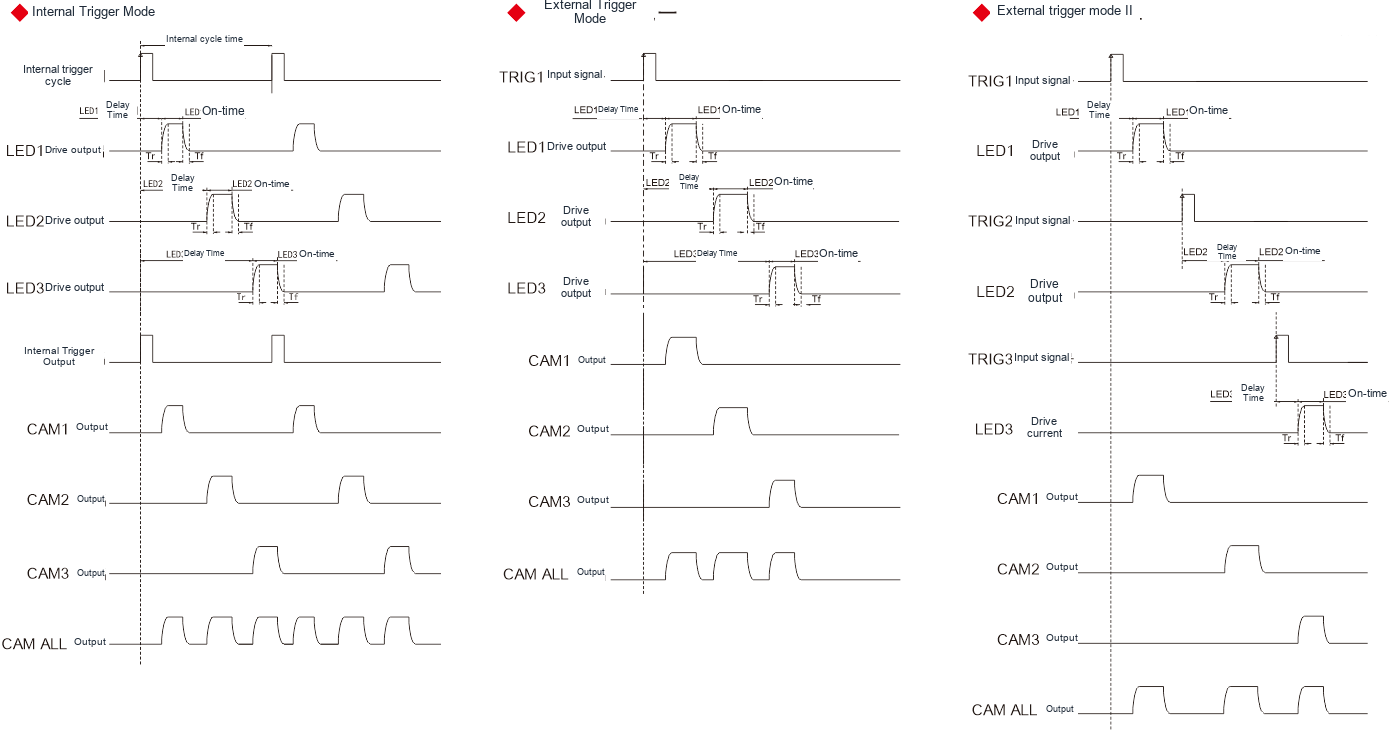
Keep the light-guide geometry fixed and avoid saturation in every channel. Store current, exposure and trigger order as one recipe. Verify channel switching with the camera so that a frame is not exposed during a transition between colours.
What do the optical setup and sample images show?