LuxMV
See What Matters.
Discuss a project
Testing Facility & Workflow

Machine Vision Optical Testing Laboratory

A machine vision lighting test helps answer four core questions: what illumination geometry reveals the target feature, which optical settings improve contrast, where the setup becomes less reliable, and which parameters matter for production. LuxMV optical lab can compare sample parts and provide setup notes for discussion.

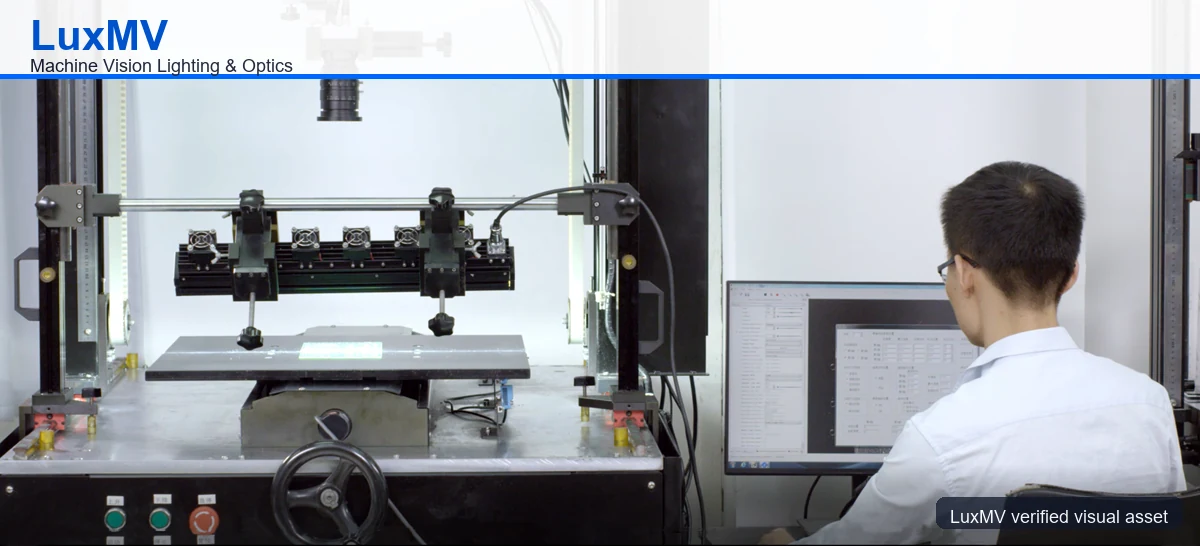
Spectroscopic lighting test bench
Spectroscopic test bench for wavelength, uniformity, and output review.
Visual proof

Visible evidence before selection

Use product, process, facility, and inspection images to check whether the page claim is tied to a visible engineering condition.

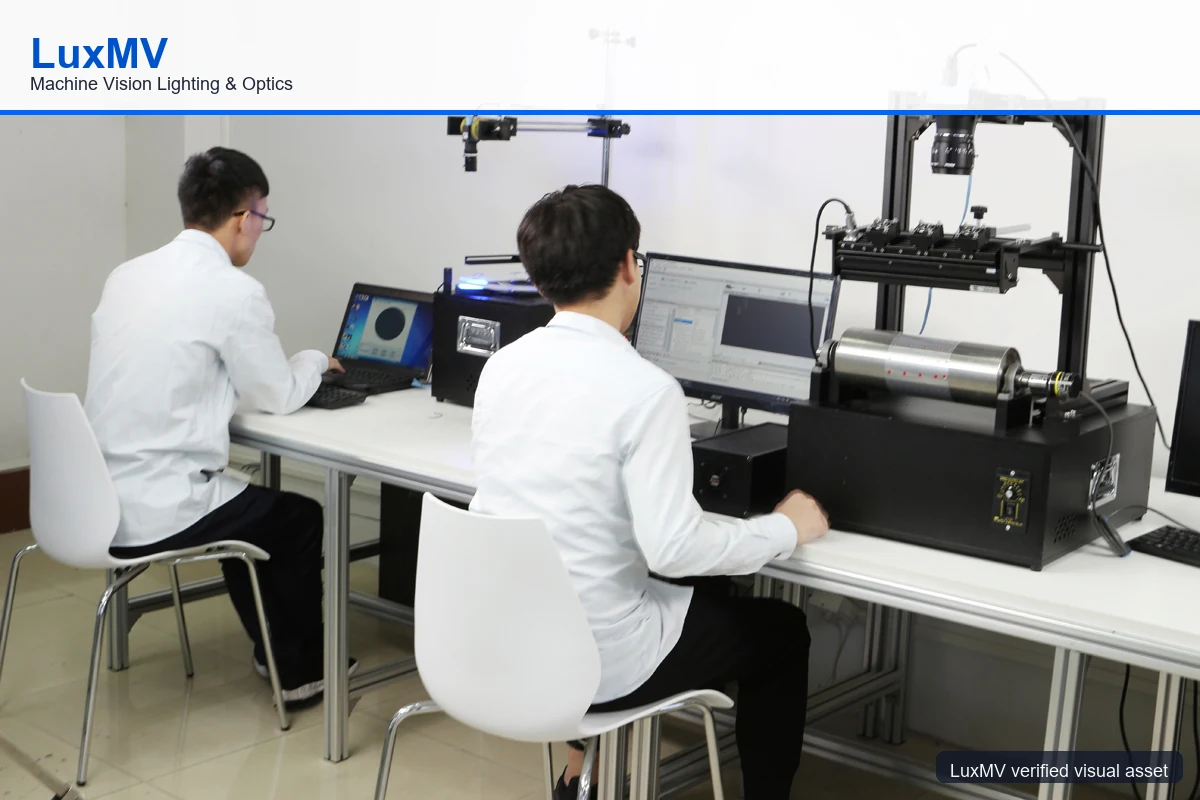
High temperature aging and stability test bench
Evidence 01Aging and stability test environment for thermal and continuous-output discussion.Review this visual together with the stated geometry, wavelength, sample, or integration constraint before selecting a final configuration.
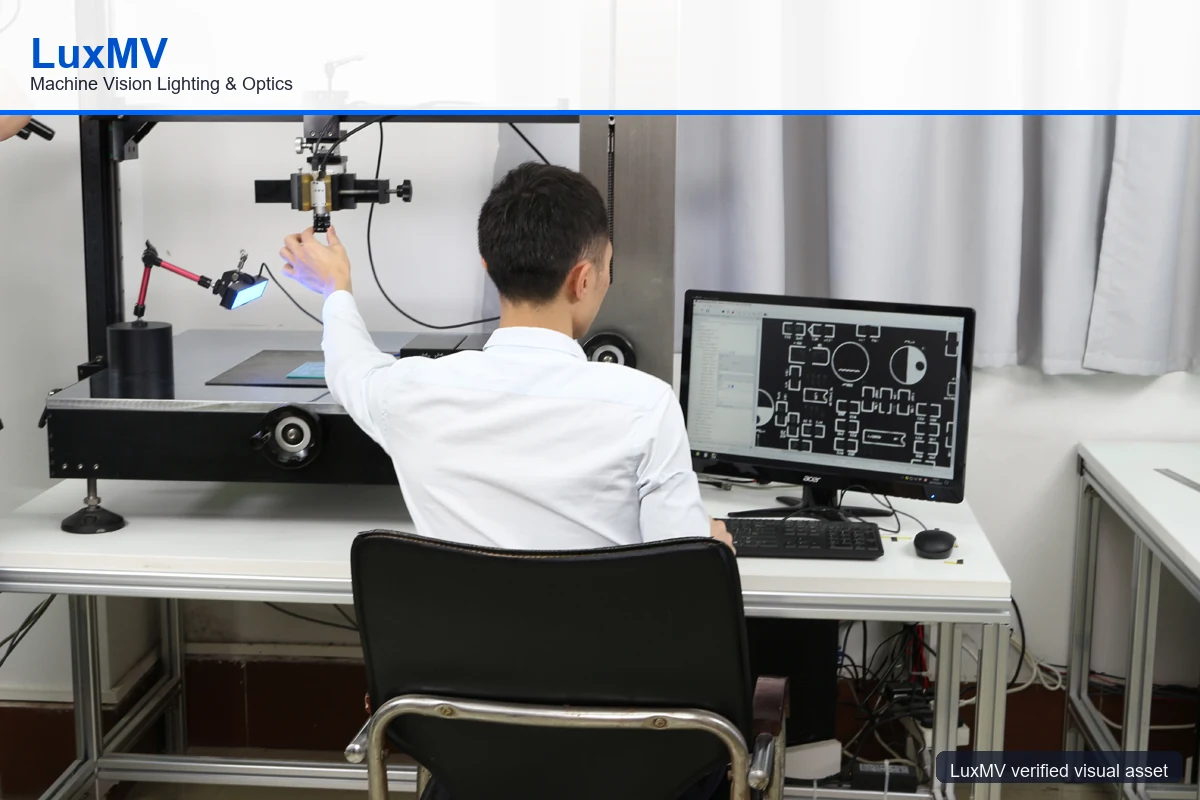
Optical geometry and reflection test setup
Evidence 02Optical geometry setup for angle, reflection, polarization, and sample contrast checks.Review this visual together with the stated geometry, wavelength, sample, or integration constraint before selecting a final configuration.

Selection considerations

Selection follows the observable condition, the optical setup, and the production constraint.

Laboratory Equipment & Optical Test Facilities

Integrating Sphere & Spectroradiometer: Precise measurement of peak wavelength, FWHM spectral width, and total luminous output.

Technical considerations
  • SWIR & UV Inspection Bench: Short-wave infrared (1050nm-1650nm) silicon penetration and 365nm UV fluorescence imaging.
  • High-Speed Motion Conveyor Rig: Overdrive strobe synchronization testing for line-scan and area-scan moving inspection.
  • Environmental Thermal Testing Chamber: Operating temperature limits and continuous thermal dissipation checks.

Key Variables Evaluated During Pre-Test

Geometry: Ring, bar, coaxial, dome, backlight, line-scan, low-angle, flat dome, or custom combined structures.

Technical considerations
  • Optics: Wavelength (UV, Red, Green, Blue, IR, SWIR), diffusers, polarizers, telecentric lenses, and working distance.
  • Acquisition: Exposure time, camera gain, pulse width (10μs-990μs), strobe current, and trigger synchronization.

Pre-Test Setup Notes

High-contrast candidate images with exact light model numbers, wavelength, illumination angle, and controller settings.

Technical considerations
  • Failure boundary analysis showing glare limits, motion blur limits, and thermal performance thresholds.
  • RFQ Integration Package containing 3D STEP models, cable pinouts, mounting brackets, and controller channel requirements.

Frequently Asked Questions

Q: Can I send sample parts to LuxMV for optical contrast testing? A: Yes. LuxMV provides sample pre-testing in our optical laboratory. Integrators can share sample parts, and LuxMV optical engineers compare wavelength, angle, polarization, and strobe timing, then provide optical contrast notes for discussion.

Technical considerations
  • Q: What optical test equipment is available in the LuxMV laboratory? A: Our laboratory includes Integrating Spheres, Fiber Spectroradiometers, High-Speed Line-Scan Test Rigs, High/Low Temperature Environmental Chambers, and SWIR (1050nm-1650nm) Imaging Benches.
  • Q: How do you test lighting for moving high-speed inspection lines? A: We test high-speed applications using overdrive strobe controllers (4STU Series) synchronized with camera trigger signals, verifying pulse width (10μs-990μs), peak current, and thermal duty limits.

Questions for the engineering discussion.

What information helps when discussing Machine Vision Optical Testing Laboratory?

Share the inspection target, material, camera and lens information, field of view, working distance, speed, trigger constraints, and relevant drawings or sample images.

How can I compare a machine vision optical testing laboratory decision?

Compare the configuration against the real inspection condition, retain useful settings and limitations, and include project-specific details in the RFQ or sample-test discussion.