
LuxMV
See What Matters.
Discuss a project
One decision

Ring Light vs Bar Light

Use a ring light when the part fits inside the ring and you want light around the lens without aligning several lamps. Use bar lights when the part is larger than the ring, the light must come from the side, or one scratch direction has to be aimed. Adding more bars can fix a miss, and it also adds alignment work.

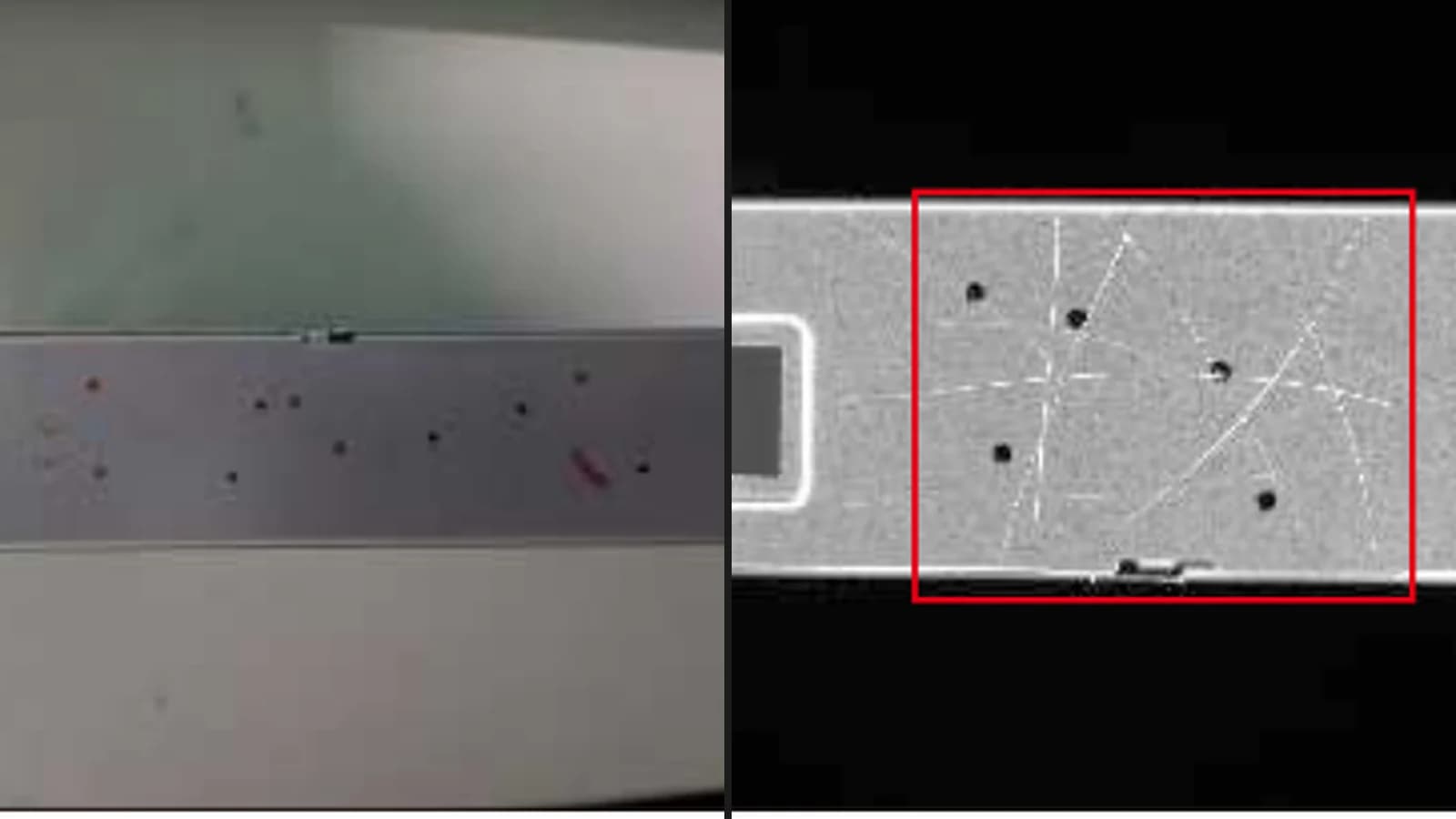
Catalog photograph of a metal surface beside the bar-lit result with scratches visible
Case 1 uses this catalog pair: a metal surface and the bar-lit scratch result. It is not a ring-light photograph.
Selection references

Visual references for selection

These photographs show the shop or the catalog comparison. Send the part to match a series.

Metal parts with a screw hole, button, ring, thread, and magnetic core
Reference 01Case 2 is this metal-geometry reference. The photograph is not labeled with a ring-light or bar-light model.Send the part or the images with this condition.

Selection considerations

Open the matching series, then send the part or the images.

Case 1: a metal face with directional scratches

The catalog sheet shows scratches on a metal surface after bar illumination. A bar such as LXV-4BR can be aimed so those marks catch the light. If a mark runs with the bar, that mark drops out and a second bar, or a pair, is the usual fix. That second bar needs its own angle and distance. When the face is small enough to sit inside a ring, a low-angle setting on LXV-RN puts light around the lens in one mount. The ring is the shorter setup. It is the wrong setup when the field is wider than the ring opening.

Case 2: a metal part with a hole, a thread, and a raised feature

The second photograph shows a screw hole, a button, a ring, a thread, and a magnetic core. Those features do not share one ideal angle. A ring around the lens can light the face if the part fits the inner diameter. A thread or an edge that only appears from one side still needs a bar that you can move. LXV-RN documents angle groups at 0°, 15°, 30°, 45°, 60°, and 90°, plus diffuser and polarizer options. LXV-4BR is the bar series with a 24 V supply and a large set of drawings. Neither photograph is a controlled before-and-after of those two model codes.

When is the extra bar not worth adding?

Do not add a third or fourth bar to imitate a ring if a ring already fits the field of view and the defect is visible from the low-angle group. Do add bars when the part is long, the camera cannot look through a ring, or the defect appears from only one side. The cost of the extra bar is alignment time and another cable, not a claim about which lamp is universally brighter.

ConditionStart hereStop and change
Part fits inside the ring and scratches run in more than one directionLXV-RNThe field of view is larger than the ring, or the camera cannot see through it.
Part is long, or the light must come from one sideLXV-4BRYou are adding several bars only to copy a ring that would have fit.

Questions for the engineering discussion.

Is a ring light always simpler than bar lights?

It is simpler when the part and the field of view fit inside the ring and one angle is enough. A large part, a field wider than the ring, or a scratch that only appears from one side is a bar-light problem even though the bars take longer to align.

Can one bar light replace a dark-field ring?

One bar lights one direction. A scratch parallel to that bar can disappear. Surrounding a small part with several bars can recreate a dark field, but the mounting and alignment cost is the reason to try a low-angle ring first when the part fits.

Which LuxMV series should I open first?

Open LXV-RN when you need a ring with documented angle groups from 0° to 90°. Open LXV-4BR when you need a 24 V bar with published drawings and more than one mounting method. Confirm diameter, length, colour, and angle on the model page.